
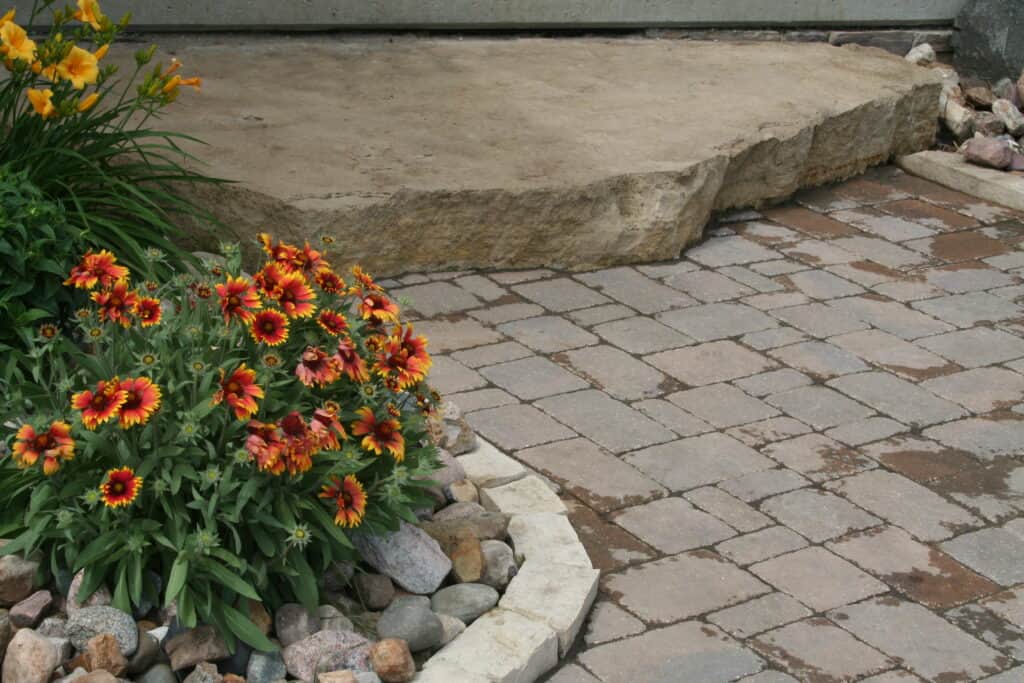
Polymeric sand, often referred to as poly sand, has become a popular choice for homeowners and landscapers looking to create long-lasting, stable paver surfaces. Made from a blend of fine sand and special bonding polymers, it hardens when activated with water, helping to lock pavers tightly in place.
One of the primary benefits of polymeric sand is its ability to increase joint stability. After it cures, the sand forms a firm bond that reduces shifting, settling, and erosion, which helps maintain a smooth surface over time. This stability makes patios, walkways, and driveways more durable and visually appealing.
Here’s what polymeric sand does for your hardscape:
Increase Joint Stability
After it cures, polymeric sand forms a firm bond that reduces shifting, settling, and erosion, which helps maintain a smooth surface over time. This stability makes patios, walkways, and driveways more durable and visually appealing.
Limits Weed Growth
Another major advantage is the way polymeric sand helps limit weed growth. Because it hardens, it creates a barrier that makes it difficult for weed seeds to take root between pavers. While it won’t completely eliminate weeds, it significantly reduces the amount of growth compared to traditional sand.
Discourages Ants and Handles Water Well
Additionally, the hardened joints discourage ants and other insects from building nests, which helps protect the integrity of the paver system. Polymeric sand also handles water well. Its resistance to rain, runoff, and weather-related erosion keeps joints filled and protected for years, contributing to a cleaner, more polished appearance.
Simple to Maintain
Maintaining polymeric sand is relatively simple. Regular sweeping helps keep the surface free of dirt and debris that can encourage weeds or trap moisture. When cleaning, it’s important to avoid high-pressure washing directly on the joints. Keeping the nozzle at least a foot above the pavers and spraying at an angle helps prevent washing out the sand.
Over time, you may notice small cracks or gaps in high-traffic areas; when that happens, you can easily reapply polymeric sand to those joints and reactivate it with water. Some homeowners choose to seal their pavers every few years, which enhances color, reduces staining, and prolongs the life of both the pavers and the sand.
Depends On Good Drainage
Finally, good drainage plays an important role in the longevity of polymeric sand. Standing water can slowly weaken joints, so addressing drainage issues, such as adjusting slopes or redirecting downspouts, helps preserve the installation.
With proper care, polymeric sand can last many years while keeping paver surfaces attractive, stable, and low-maintenance. Its blend of durability, weed resistance, and ease of upkeep makes it an excellent choice for any hardscape project.
Thinking about a new patio, walkway, or driveway? Reach out today!
📞 (515) 987-4394
Contact Us to get started!