
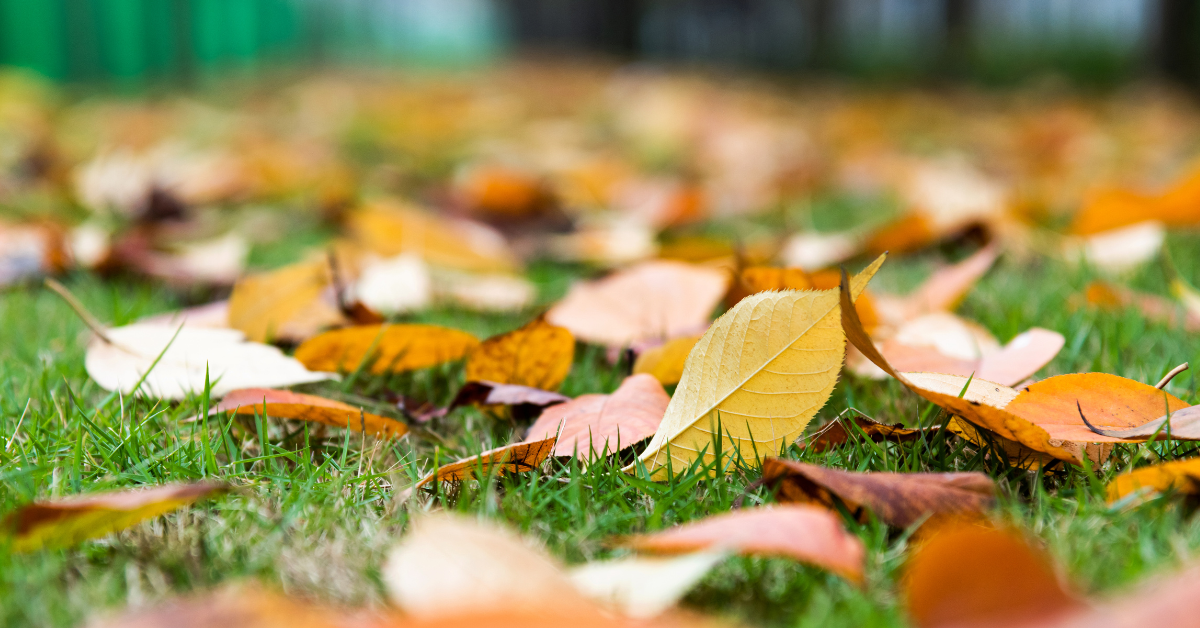
Autumn in the Des Moines metro is one of the best times of year to enjoy your yard. As trees across Waukee, West Des Moines, Urbandale, Clive, and Johnston shift into gold and crimson, it’s easy to let fallen leaves sit for “just one more weekend.” But that delay comes with a real cost. A thick layer of leaves left on your lawn isn’t just messy, it actively damages your turf underneath.
The good news is that a little planning now protects your investment all winter long. Understanding what leaves do to your grass, and how to manage them the right way, sets your lawn up for a strong, green comeback next April instead of a spring full of dead patches and repair work.
Here’s what’s happening under those leaves, and how to stay ahead of it before the snow flies.
Why Are Leaves Stealing Your Grass's Sunlight
Cool-season grasses like Kentucky bluegrass and tall fescue, the varieties common across Central Iowa lawns, actually do some of their most important growing in fall. As summer heat fades, these grasses use the cooler days to build up energy reserves in their roots to survive winter.
A thick layer of leaves gets in the way of that process in two ways:
- It blocks sunlight, so the grass can’t photosynthesize and starts to yellow and weaken.
- It cuts off air circulation to the soil, which the roots need to breathe and take up nutrients.
Left too long, the grass underneath simply can’t keep up.
Leaf It Alone and Disease Moves In
Dry leaves are one thing, but Iowa fall weather rarely stays dry. Morning dew, frost, and rain soak into fallen leaves and turn them into a heavy, matted layer sitting right on top of your grass.
That trapped moisture creates ideal conditions for fungal disease, especially snow mold, both the pink and gray varieties. Once snow covers a soggy layer of leaves and weakened turf, the fungus has everything it needs to spread through the winter. Property owners in Grimes, Pleasant Hill, Altoona, Ankeny, and Norwalk often don’t discover the damage until the snow melts in spring, and by then it can mean large dead patches and costly reseeding.
That trapped moisture creates ideal conditions for fungal disease, especially snow mold, both the pink and gray varieties. Once snow covers a soggy layer of leaves and weakened turf, the fungus has everything it needs to spread through the winter. Property owners in Grimes, Pleasant Hill, Altoona, Ankeny, and Norwalk often don’t discover the damage until the snow melts in spring, and by then it can mean large dead patches and costly reseeding.
Thatch Happens (And So Do Pests)
Short grass clippings break down quickly and actually feed your lawn. Whole leaves are a different story. They take much longer to decompose, and as they slowly break down, they add to the thatch layer between the soil and the grass blades. Too much thatch blocks water and fertilizer from reaching the roots where they’re needed most.
A damp mat of leaves also makes a comfortable winter shelter for pests and rodents, giving them a hidden place to nest and cause additional damage to your lawn through the colder months.
Mulch or Remove? Here's How to Tell
Not every lawn needs the same approach, and the right one comes down to how much leaf coverage you’re dealing with.
- Light coverage: If you can still see most of the grass through the leaves, a mulching mower can shred them into dime-sized fragments that settle into the lawn and break down naturally, adding nutrients back into the soil.
- Heavy coverage: Once leaves fully cover the grass, mulching isn’t enough. At that point, blowing and raking the leaves off the property is the only way to protect the turf underneath.
Don't Wait, the Window Closes Fast
The window for effective fall cleanup in Central Iowa is shorter than most people expect. Once the ground freezes and snow locks a layer of leaves in place, the damage to your lawn is set until spring.
Staying ahead of leaf buildup, and clearing landscape beds before winter sets in, gives your lawn the light, air, and protection it needs to bounce back thick and green next spring.
Don’t let this fall’s leaves become next spring’s dead patches. Get a full-service commercial or residential fall clean-up before the freeze. Reach out today!
📞 (515) 987-4394